
I’ll never forget sitting on my bathroom floor at 2 AM, dry-heaving for the fifth time that night, thinking “This can’t be normal.” My mom’s advice to “just sip some ginger ale, honey” felt like a cruel joke when I couldn’t even keep water down. That’s when I discovered IV therapy for pregnancy – and honestly, it saved my sanity and probably my health.
Here’s the thing nobody tells you: “just drink more water” is about as helpful as telling someone with a broken leg to “just walk it off.” After going through hell and back with severe pregnancy nausea, I learned there’s a whole medical reality about pregnancy hydration that most women never hear about until they’re desperately googling at 3 AM. What really gets me is that morning sickness occurs in as many as 90% of normal pregnancies, yet most of us are flying blind when it comes to knowing when we actually need medical help.
Table of Contents
- The Brutal Truth About Pregnancy Hydration That Everyone Ignores
- When Morning Sickness Becomes a Medical Emergency (And How to Know)
- Safety Stuff That Actually Matters (Not Just Medical Jargon)
- The Home IV Revolution – My Honest Take
- Making IV Therapy Affordable When You’re Already Broke
- Timing Your Treatment So You Don’t End Up in the ER
- Building IV Therapy Into Your Survival Plan (Let’s Be Real)
- Final Thoughts From Someone Who’s Been There
TL;DR – What You Actually Need to Know
- Your body needs way more than eight glasses of water during pregnancy – it’s making 50% more blood while your ability to actually stay hydrated gets completely screwed up
- There’s a specific point (around 72 hours) when pregnancy nausea stops being “uncomfortable” and becomes “call your doctor NOW” – knowing these signs could save you from a terrifying ER visit
- Pregnancy IV treatments are totally different from regular IVs – they have to be safe for your baby too, so not every place that does IVs can handle pregnant women
- You can get IV therapy at home now (yes, really), but you need providers who actually know what they’re doing with pregnant patients
- Insurance might cover it if you jump through the right hoops – specific diagnosis codes and proving you tried everything else first
- Some doctors are starting to do preventive IV therapy for high-risk pregnancies instead of waiting until you’re practically dying
The Brutal Truth About Pregnancy Hydration That Everyone Ignores
I used to think pregnancy hydration was simple – drink water, take vitamins, done. Boy, was I wrong. What I discovered during my own pregnancy nightmare was that your body during pregnancy is basically trying to fill a swimming pool with a garden hose while someone keeps poking holes in the bottom.
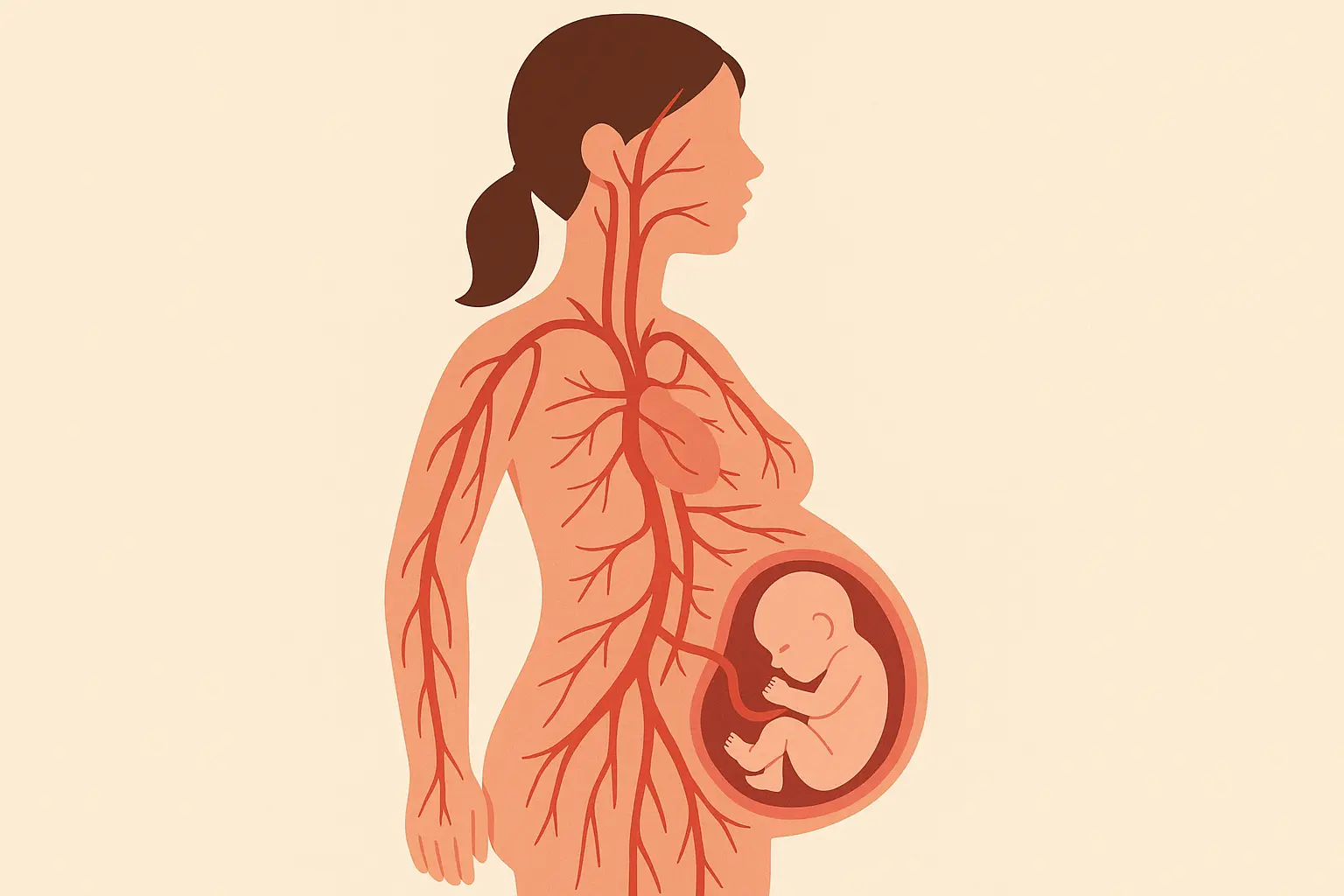
You feel like you got hit by a truck, but everyone just says “welcome to pregnancy!” Meanwhile, your body is literally making 50% more blood while prioritizing your baby’s needs over keeping you functional. Understanding the real reasons behind pregnancy exhaustion becomes crucial when you’re dealing with dehydration during pregnancy, because what everyone calls “normal pregnancy symptoms” might actually be your body screaming for help that regular hydration methods can’t provide.
Why Your Body Fights Against You Staying Hydrated
Here’s what nobody prepared me for – pregnancy turns your body into two separate people competing for the same resources, and spoiler alert: the baby always wins. This isn’t about drinking more water; it’s about understanding why normal hydration strategies fail when your entire system gets hijacked.
The Blood Volume Thing That Blindsides Everyone
Your body increases blood volume by 40-50% during pregnancy, but here’s the kicker – this happens faster than your body can replace the good stuff that makes blood actually useful. You end up with watered-down blood that can’t effectively do its job, which is why you can drink gallons of water and still feel like garbage.
I remember chugging water constantly but feeling more exhausted than ever. Turns out, all that water was just diluting what little electrolytes I had left. The liquid iv pregnancy products you see everywhere might help a tiny bit, but they’re still limited by your digestive system’s ability to actually process them when pregnancy hormones have basically put your stomach on strike.
How Your Baby Hijacks Your Entire System
Your body has built-in programming that automatically gives your baby the VIP treatment while leaving you with whatever scraps are left over. The placenta essentially becomes a greedy middleman, taking all the good blood and nutrients for your baby while you’re running on fumes.
This explains why you can be drinking tons of water but still feel like you’re dying of thirst. Your baby is getting five-star treatment while you’re over here feeling like a deflated balloon.
Third Trimester Physics Working Against You
As your belly grows, it literally squashes major blood vessels and drainage pathways. Imagine trying to water your garden with a kinked hose – that’s basically what’s happening inside your body. No amount of drinking water can fix a plumbing problem.
IV pregnancy treatments can bypass this whole mess by delivering fluids directly into your bloodstream, going around all the compressed and blocked pathways that are making you miserable.
The Vicious Cycle That Trapped Me (And Probably You Too)
Pregnancy nausea and dehydration create this horrible feedback loop that’s nearly impossible to break once you’re in it. Dehydration makes you more nauseous, nausea prevents you from keeping anything down, and round and round you go until you’re contemplating whether the ER is really that bad of an option.
Understanding this cycle helped me realize why IV intervention often becomes necessary rather than just a luxury. Once you’re caught in this spiral, oral rehydration becomes basically impossible.
When Your Stomach Goes on Strike
Pregnancy hormones slow everything down in your digestive system, meaning food and drinks just sit there like they’re waiting for permission to move along. This makes drinking fluids for hydration about as effective as trying to fill a bucket with a hole in the bottom.
Sarah, a teacher I met in my pregnancy support group, told me she couldn’t even keep down ice chips by week 10. She was so dehydrated she couldn’t cry actual tears anymore – just dry sobs. Her husband found her passed out on the kitchen floor trying to make toast. That’s when they knew this wasn’t just “normal morning sickness.”
After just one IV session with pregnancy-safe electrolytes, she could finally keep water down for the first time in weeks. It was like someone had flipped a switch.
The Mineral Loss Domino Effect
When you’re constantly throwing up, you lose minerals in a predictable order – first magnesium, then potassium, then sodium. Each loss makes the nausea worse and makes it harder for your body to hold onto whatever you do manage to keep down. It’s like trying to fill a leaky bucket while someone keeps making the holes bigger.
IV therapy can stop this domino effect by replacing these minerals directly into your bloodstream, often providing relief within hours instead of the days or weeks it might take with oral supplements. The importance of minerals during pregnancy becomes even more critical when you understand how magnesium deficiency can make pregnancy nausea worse and contribute to the whole downward spiral that makes IV treatment necessary.
When Morning Sickness Becomes Something Scarier
There’s an actual medical line between “this sucks but I can handle it” morning sickness and hyperemesis gravidarum, which is fancy medical speak for “you need help NOW.” I wish someone had explained these warning signs to me before I was in crisis mode, desperately googling symptoms while dry-heaving.
Most women have no idea these clinical markers exist until they’re already past them.
The Red Flags You Need to Know Right Now
Here’s what I wish someone had grabbed me by the shoulders and told me: if you lose more than 5% of your pre-pregnancy weight, if you’re throwing up more than 5 times a day, or if you can’t keep fluids down for 24+ hours, stop being a hero and call your doctor. These aren’t suggestions – they’re medical emergency signs that mean oral treatment has failed.
Your pee should look like pale lemonade. If it’s darker than apple juice, you’re in trouble. If you’re not peeing much at all? Time to make that phone call.
| What’s Happening | Normal vs. Time to Panic | What to Do |
|---|---|---|
| Weight Loss | Normal: 1-2 lbs up and down | Panic: More than 5% of what you weighed before pregnancy |
| Throwing Up | Normal: 1-3 times daily | Panic: More than 5 times daily or can’t keep anything down for 24+ hours |
| Pee Color | Normal: Pale yellow | Panic: Dark yellow/brown or barely any pee |
| How You Feel | Normal: Tired and queasy | Panic: Dizzy when you stand up, heart racing, can’t think straight |
Why Waiting Too Long Gets Dangerous Fast
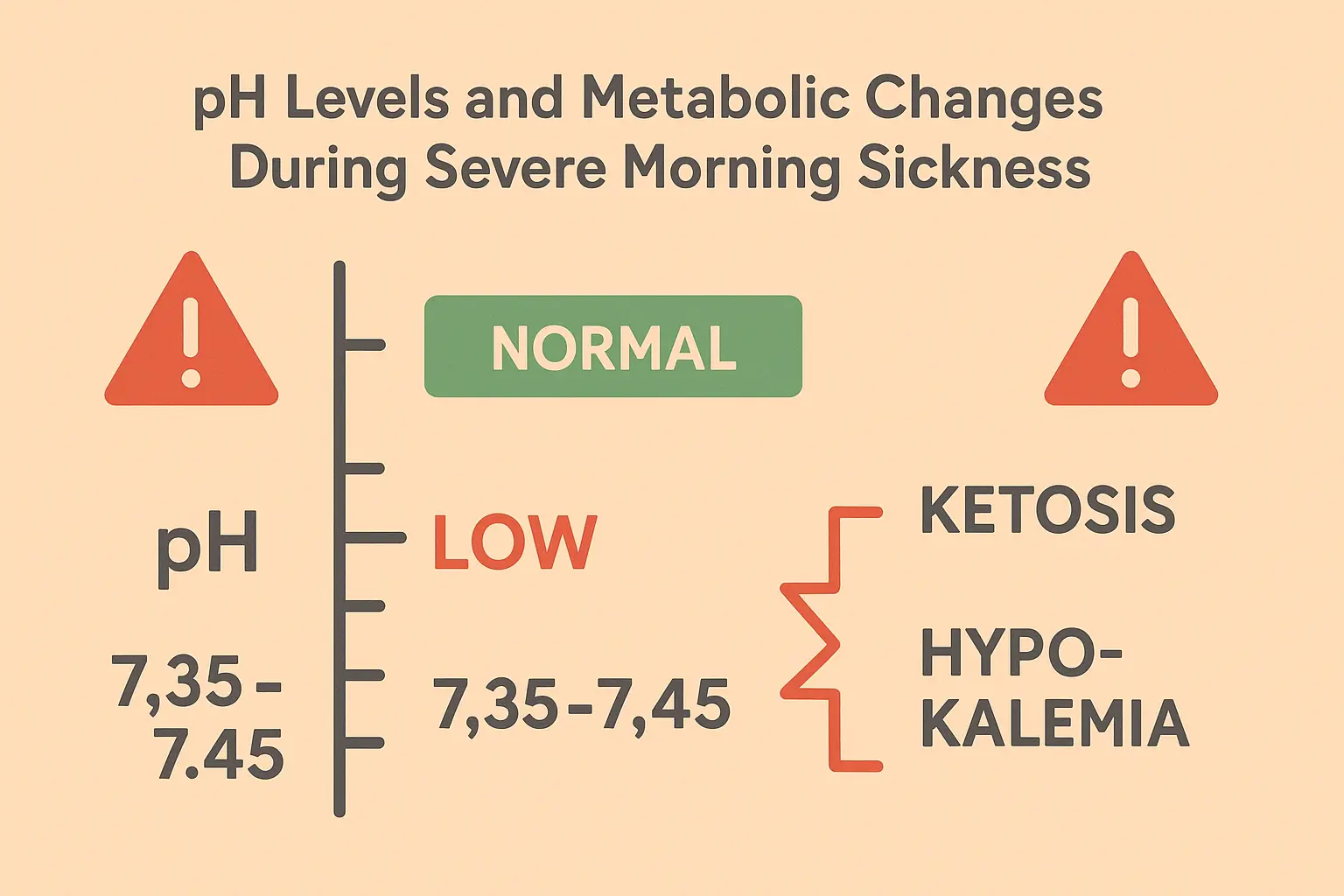
Here’s something that really ticked me off – nobody told me that prolonged vomiting during pregnancy can actually change your blood chemistry in dangerous ways. Your blood becomes too acidic (metabolic acidosis), and this happens faster during pregnancy because your body is already working overtime.
Oral rehydration simply cannot fix this quickly enough once it starts. IV therapy with the right electrolyte balance can correct this within hours, potentially preventing serious complications for both you and your baby.
Safety Stuff That Actually Matters (Not Just Medical Jargon)
Here’s what I learned the hard way about IV during pregnancy – not all IV places know how to treat pregnant women. I walked into one clinic and they looked at my belly like I had three heads. Modern pregnancy IV therapy uses completely different formulations, timing, and monitoring because you’re basically treating two people at once, and what’s good for mom isn’t always good for baby.
Recent research shows that over 1 in 3 pregnant patients worldwide experience iron deficiency anemia, which means specialized IV protocols during pregnancy aren’t just nice to have – they’re becoming essential for many women’s health and safety.
Why Pregnancy IV Solutions Are Totally Different
You can’t just use regular IV solutions on pregnant women and hope for the best. The concentration, what’s in it, and even how fast it goes in all need to be adjusted because pregnancy changes how your body processes everything. Using standard IV protocols during pregnancy can actually create problems instead of solving them.
Solution Strength That Won’t Stress Your Baby
The concentration of IV solutions directly affects blood flow to your placenta, which means the wrong mix can actually reduce oxygen and nutrients getting to your baby. Pregnancy-safe solutions match your body’s natural fluid concentration to prevent messing with placental blood flow.
The Glucose Balancing Act
Adding sugar to IV solutions during pregnancy is tricky business. Too much can trigger blood sugar spikes that affect how your baby grows, while too little leaves you feeling weak and shaky. Pregnancy-specific IV protocols use just the right amount of glucose to give you energy without creating problems down the road.
How Treatment Changes Throughout Your Pregnancy
What’s safe and effective in your second trimester might be totally wrong for your first or third trimester. Your body’s needs and vulnerabilities shift dramatically as your pregnancy progresses, which is why timing matters so much.
| When | What to Watch Out For | What Goes in the IV | How Often to Check |
|---|---|---|---|
| First 13 weeks | Baby’s brain and spine forming | Extra folate, B-vitamins, keep it simple | Weekly weight, check for ketones |
| 14-27 weeks | Sweet spot – lowest risk | Standard electrolytes, iron if needed | Every 2 weeks, blood pressure |
| 28+ weeks | Blood pressure problems, swelling | Less sodium, careful with fluids | Daily weight, blood pressure |
First Trimester – The Critical Development Window
During weeks 4-12, IV formulations need enhanced folate and B-vitamins because your baby’s brain and spinal cord are forming. This is when proper nutrition delivery is absolutely critical, and standard IV solutions don’t account for these specific needs.
Understanding genetic factors that affect how your body processes these nutrients becomes particularly important during early pregnancy, which is why learning about genetics in personalized healthcare can help determine the best IV formulations for supporting healthy development.
Second Trimester – The Golden Window
Weeks 14-28 are usually the sweet spot for IV therapy. Your morning sickness has hopefully calmed down enough that you’re not constantly throwing up, but you haven’t hit the third-trimester complications yet. This is when IV therapy has the lowest risk and highest effectiveness.
Third Trimester – Extra Vigilance Required
During the final stretch, IV therapy protocols have to include careful monitoring for pregnancy-induced high blood pressure and preeclampsia. The fluid changes during this period can hide or trigger blood pressure problems, so providers need to adjust both what goes in the IV and how often they check on you.
Maria was 34 weeks pregnant when her hands and feet swelled up after her first third-trimester IV session. Her provider immediately recognized this as a potential warning sign and adjusted her next treatment to include less sodium and added magnesium for blood pressure support. This quick adjustment prevented complications while still helping her severe dehydration from recurring morning sickness.
The Home IV Revolution – My Honest Take
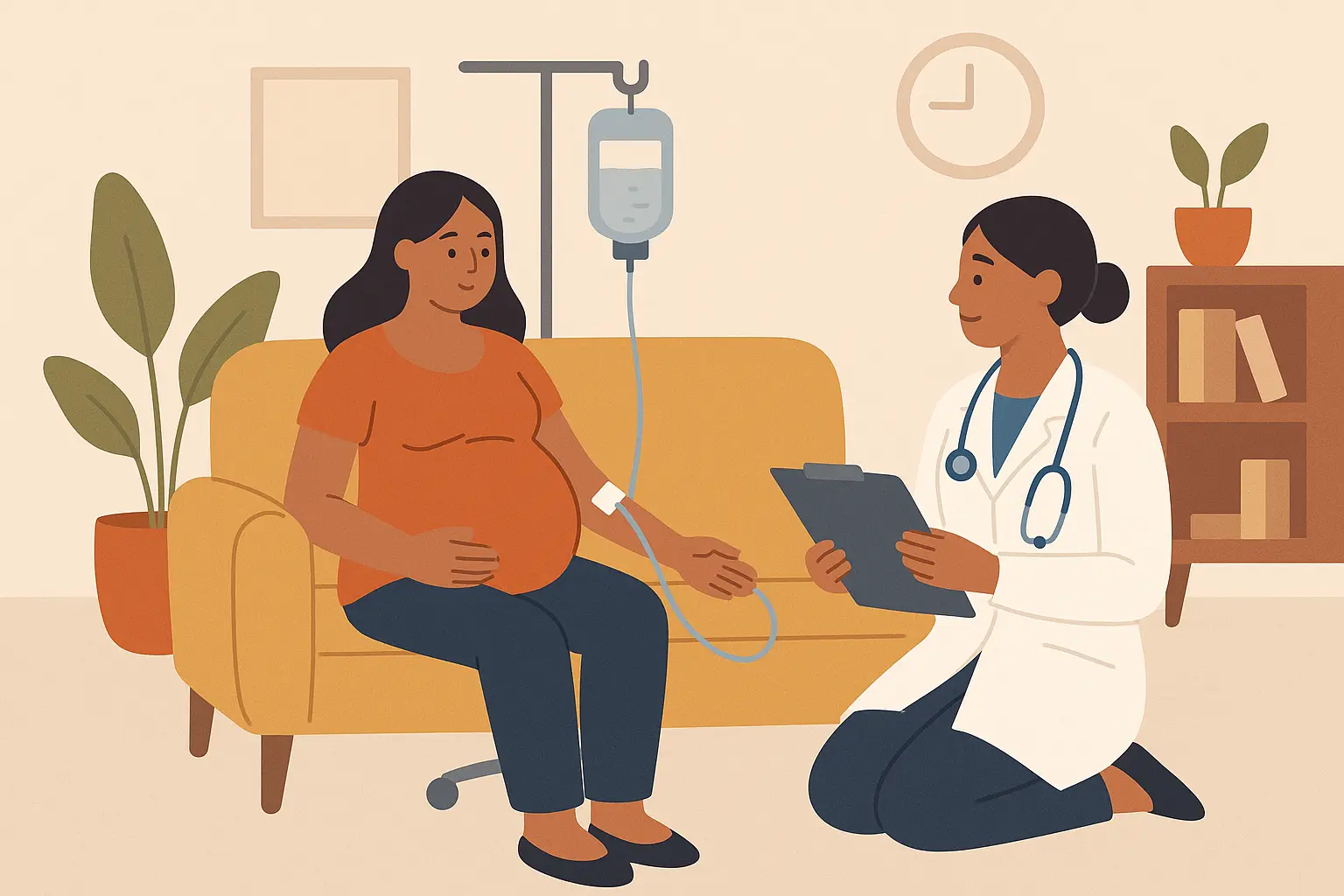
Getting IV therapy at home was a complete game-changer for me. Picture this: I’m in my pajamas, on my own couch, with my favorite blanket, while a nurse who actually understood pregnancy nausea took care of me. No fluorescent hospital lights, no waiting room full of sick people, no trying to drive when I could barely stand up – just relief in my own space.
Mobile IV services that specialize in pregnant women have made treatment possible for women who otherwise would suffer through or end up in emergency rooms. While liquid iv for pregnancy products can provide some help, mobile IV therapy delivers therapeutic levels of nutrients and hydration that oral supplements simply can’t match when you’re dealing with severe pregnancy complications.
Safety Measures That Make Home Treatment Possible
Receiving IV therapy at home during pregnancy requires way more safety planning than regular mobile IV services provide. The stakes are higher because you’re treating two patients, and things can go south quickly during pregnancy.
Understanding these safety requirements helps you choose providers who can actually handle pregnancy-specific needs instead of just winging it.
Emergency Planning That Could Actually Save Your Life
Pregnant women getting home IV therapy need direct communication channels with their OB/GYN and pre-registration at nearby hospitals. This isn’t me being paranoid – it’s practical preparation for the reality that pregnancy complications can develop fast during IV treatment.
Good providers will have these systems set up before they ever touch your arm.
Hospital-Level Cleanliness in Your Living Room
Pregnancy increases your risk of infections, making cleanliness standards even more critical for home IV therapy. The best mobile IV services maintain hospital-grade sterilization and use single-use equipment for everything that touches your body.
They should be able to show you their sterilization certificates and explain their infection control procedures before starting treatment. If they can’t or won’t, find someone else.
Real-Time Monitoring for Two Heartbeats
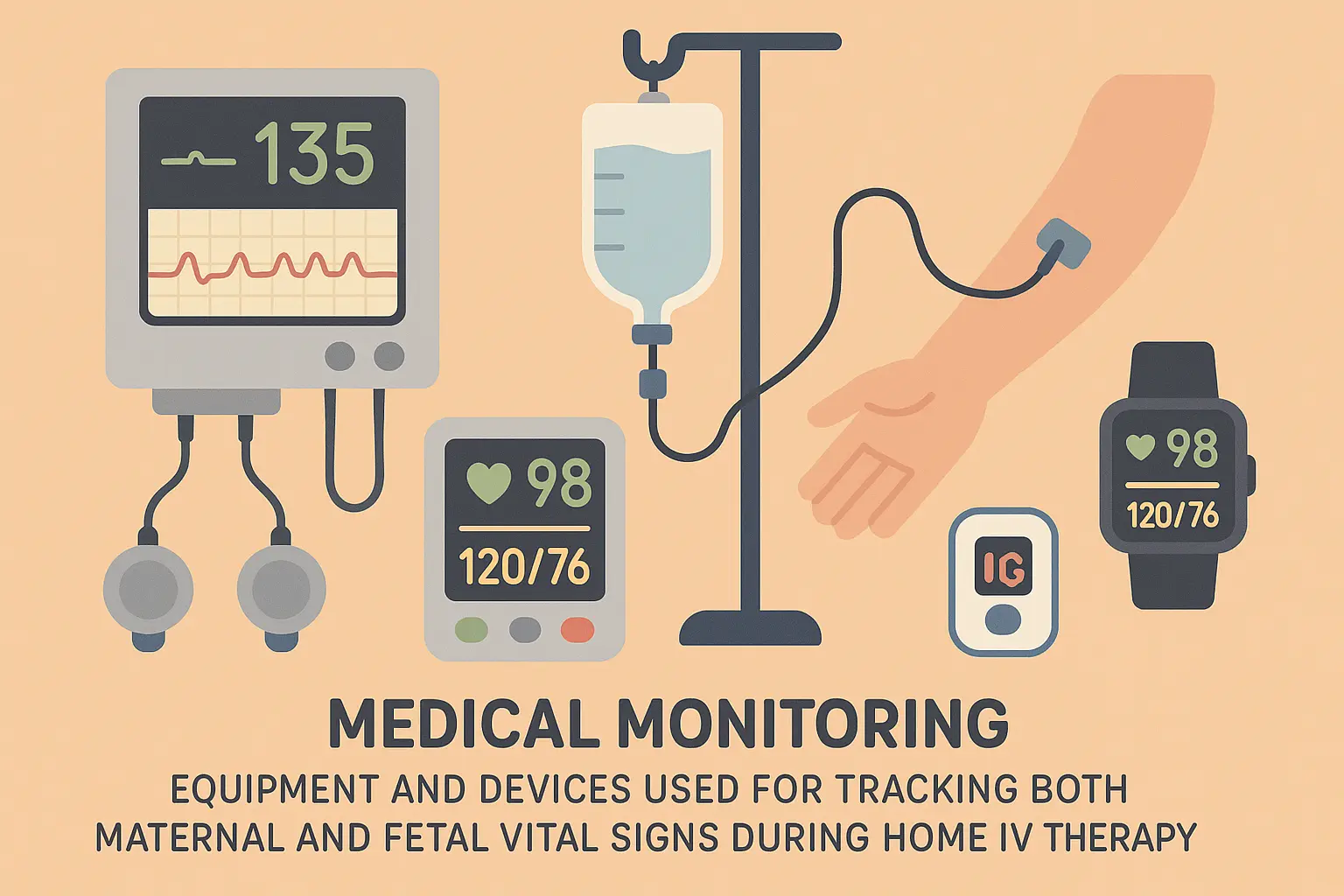
The best mobile IV services use continuous monitoring devices to track both your vital signs and your baby’s heart rate during treatment. This technology lets providers catch complications immediately and adjust treatment in real-time.
If your mobile IV provider doesn’t have this monitoring capability, they’re not equipped to safely treat pregnant patients. Studies show that side effects were reported in 11.5% of patients receiving IV therapy during pregnancy, though only 0.5% of cases were terminated early because of adverse events, which demonstrates why proper monitoring and safety protocols are essential during home treatment.
Making IV Therapy Affordable When You’re Already Broke
Let’s be honest – this stuff is expensive, and you’re already freaking out about baby costs. I spent hours on hold with my insurance company, crying because I felt so sick but couldn’t afford treatment. The cost of pregnancy IV therapy can be overwhelming, especially when you’re dealing with reduced income from pregnancy complications and mounting medical bills.
When you’re researching iv fluids during pregnancy, the financial reality often becomes the deciding factor between getting help and continuing to suffer.
Getting Insurance to Actually Cover Your Treatment
Here’s what I wish someone had told me about fighting for coverage: insurance companies will cover IV therapy for severe pregnancy complications, but you need to jump through very specific hoops in exactly the right order. Most insurance will cover hyperemesis gravidarum and severe dehydration, but you need the right paperwork and proof that you tried everything else first.
Here’s your battle plan:
- Get your OB/GYN to write a pre-authorization with specific diagnosis codes (O21.0 for mild hyperemesis, O21.1 for severe hyperemesis gravidarum)
- Document every single thing you tried to treat it yourself over 48-72 hours – keep a detailed log of what you attempted and exactly how your body responded
- Get lab work showing electrolyte imbalances or ketones to provide hard evidence that this isn’t just you being dramatic
- Have your doctor submit everything to insurance with clear medical necessity justification – not just “patient requests IV therapy”
Using Your Healthcare Savings Strategically
Health Savings Accounts and Flexible Spending Accounts can cover pregnancy IV therapy expenses, but you need proper documentation to avoid tax headaches later. Understanding which parts of treatment are eligible versus non-eligible helps you maximize your healthcare dollars.
Steps that actually work:
- Get detailed receipts that clearly show medical necessity and break down every component of treatment
- Keep all documentation of physician recommendations and medical justification – the IRS wants proof this wasn’t elective
- Understand that the medical treatment portion is HSA-eligible, but convenience fees or luxury add-ons might not be covered
- Look for payment plans from specialized pregnancy IV providers who understand insurance limitations and work with you
Timing Your Treatment So You Don’t End Up in the ER
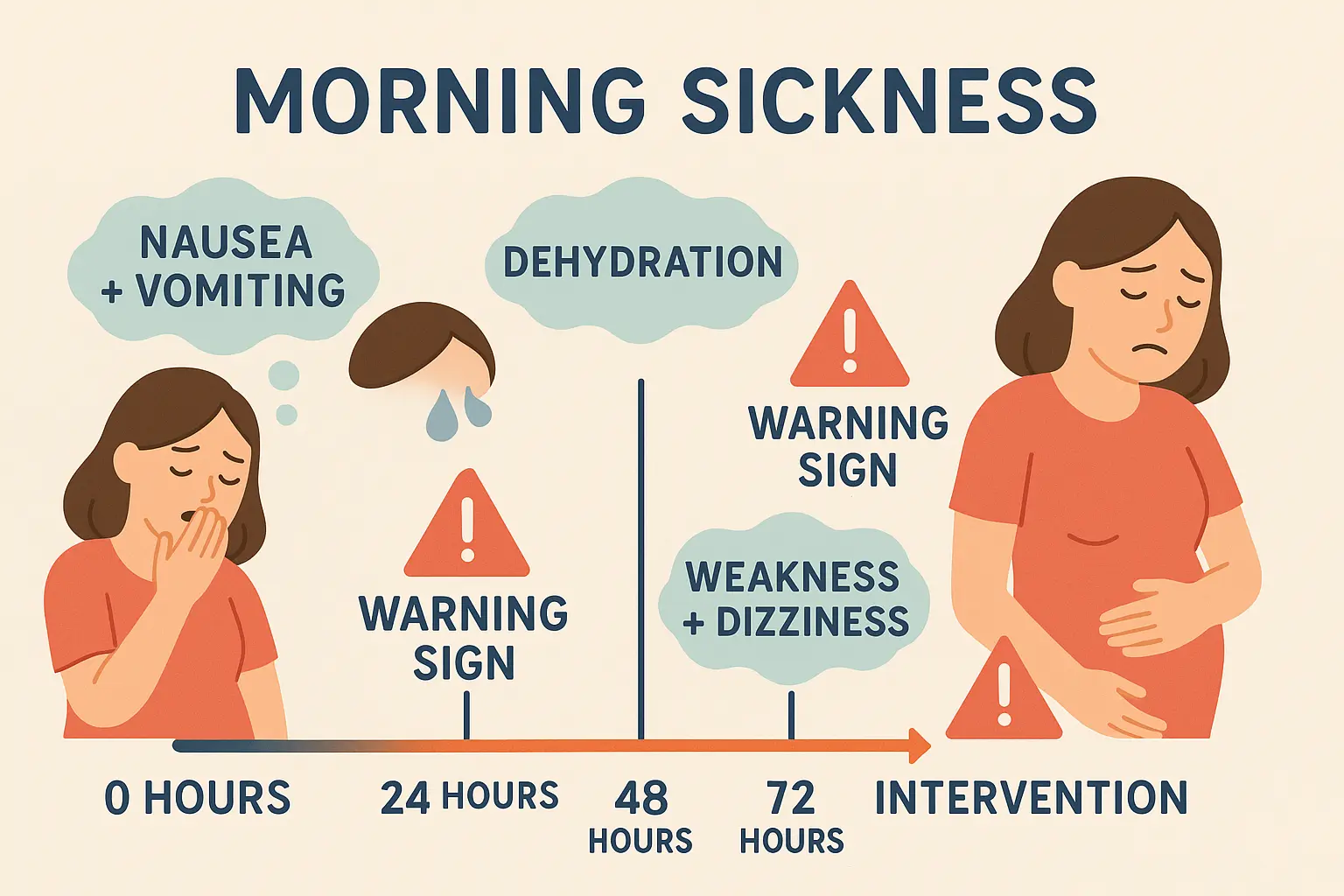
The decision of when to get iv fluids when pregnant involves knowing specific warning signs that most doctors don’t clearly explain. There’s this magic number – 72 hours. If you can’t keep fluids down for three days straight, stop being a hero. I kept thinking “I can tough this out” until my husband threatened to carry me to the ER himself. Don’t be like me.
Understanding these timing strategies could prevent so many women from reaching crisis points where they need emergency intervention.
The 72-Hour Rule That Could Save You From the ER
There’s a critical 72-hour window when pregnancy nausea transitions from “this really sucks” to “call an ambulance.” Recognizing the specific signs during this window can help you get treatment before you’re in full crisis mode, potentially avoiding hospitalization and serious complications.
Tracking Warning Signs at Home
You can monitor specific things at home that tell you when your body is moving from “uncomfortable” into “dangerous” territory. These follow predictable patterns over 24-72 hours of not being able to keep anything down, and learning to track them gives you concrete data to show healthcare providers.
What to actually monitor:
- Pee color using pregnancy hydration charts – darker than pale yellow means you need medical evaluation
- Test how concentrated your urine is using home dipsticks – readings above 1.030 mean significant dehydration requiring immediate medical attention
- Weigh yourself daily during periods when you can’t keep anything down – losing more than 2 pounds in 48 hours means call your doctor now
- Write down every single thing you try to drink or eat and whether you kept it down – this shows providers that oral rehydration has completely failed
Understanding When Your Body Goes Into Starvation Mode
Your body shifts into starvation mode faster during pregnancy because of increased metabolic demands, and early IV intervention can prevent the dangerous changes that happen when this continues unchecked. Ketone development follows a predictable timeline that helps you understand when IV intervention becomes critical rather than optional.
Recent studies demonstrate that hemoglobin levels significantly increased from 9.7 g/dL to 11.2 g/dL between diagnosis and delivery in patients receiving IV therapy, showing the measurable benefits of timely intervention.
Preventive vs. Crisis Management Approaches
The medical community is finally shifting toward using IV therapy proactively in high-risk pregnancies instead of waiting for women to nearly die before intervening. This preventive approach can dramatically improve pregnancy outcomes and quality of life, but it requires identifying risk factors early and establishing treatment protocols before problems develop.
IV therapy for pregnancy nausea is increasingly being used as prevention rather than waiting for you to end up in the ER.
Figuring Out Your Risk Factors Early
Certain things about your health history indicate whether you’re likely to need IV therapy during pregnancy. Previous severe morning sickness, carrying multiples, and certain genetic variations can predict hydration challenges before they become life-threatening.
Discussing these risk factors with your healthcare provider early in pregnancy allows for proactive planning instead of crisis management when you’re too sick to advocate for yourself.
Weekly Maintenance for High-Risk Pregnancies
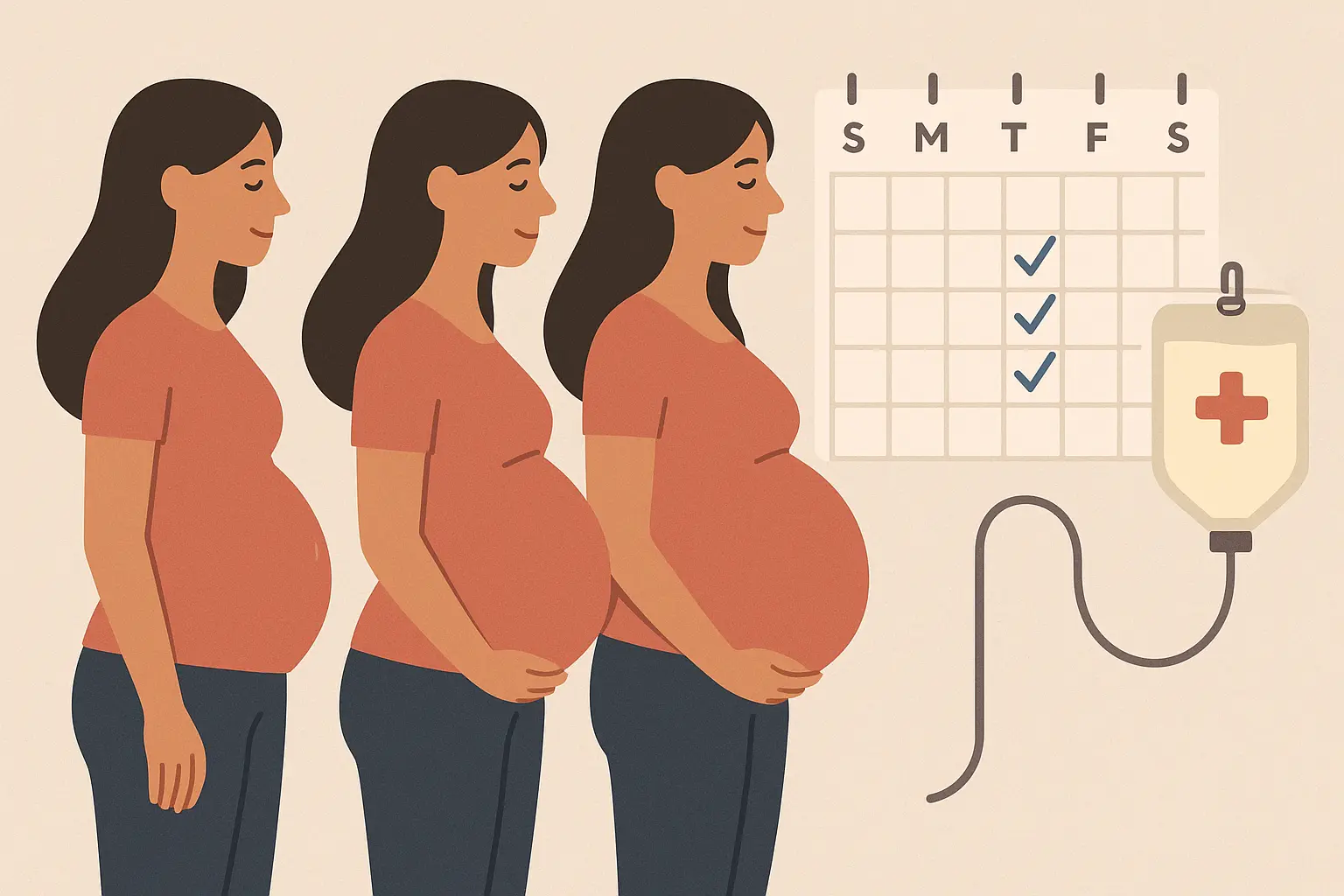
Some practitioners now recommend regular IV therapy sessions for women with recurrent pregnancy complications, treating it more like scheduled medical maintenance than emergency treatment. This approach can prevent the severe symptoms and complications that build up when hydration and nutrient deficiencies accumulate over time.
Steps to take early:
- Discuss your family history of severe morning sickness and pregnancy complications during your first prenatal visit
- Consider genetic testing for variations that affect nutrient absorption during pregnancy
- Review complications from previous pregnancies that might indicate higher risk for hydration problems
- Get baseline lab values early in pregnancy so you have comparison points if problems develop
Jennifer had severe hyperemesis gravidarum during her first pregnancy, requiring multiple hospitalizations and losing 15 pounds in her first trimester. During her second pregnancy, her healthcare team implemented a preventive IV protocol starting at 8 weeks – weekly sessions with pregnancy-safe electrolytes and B-vitamins. This proactive approach prevented any hospitalizations and allowed her to actually gain appropriate weight throughout the first trimester, completely changing her pregnancy experience.
Building IV Therapy Into Your Survival Plan (Let’s Be Real)
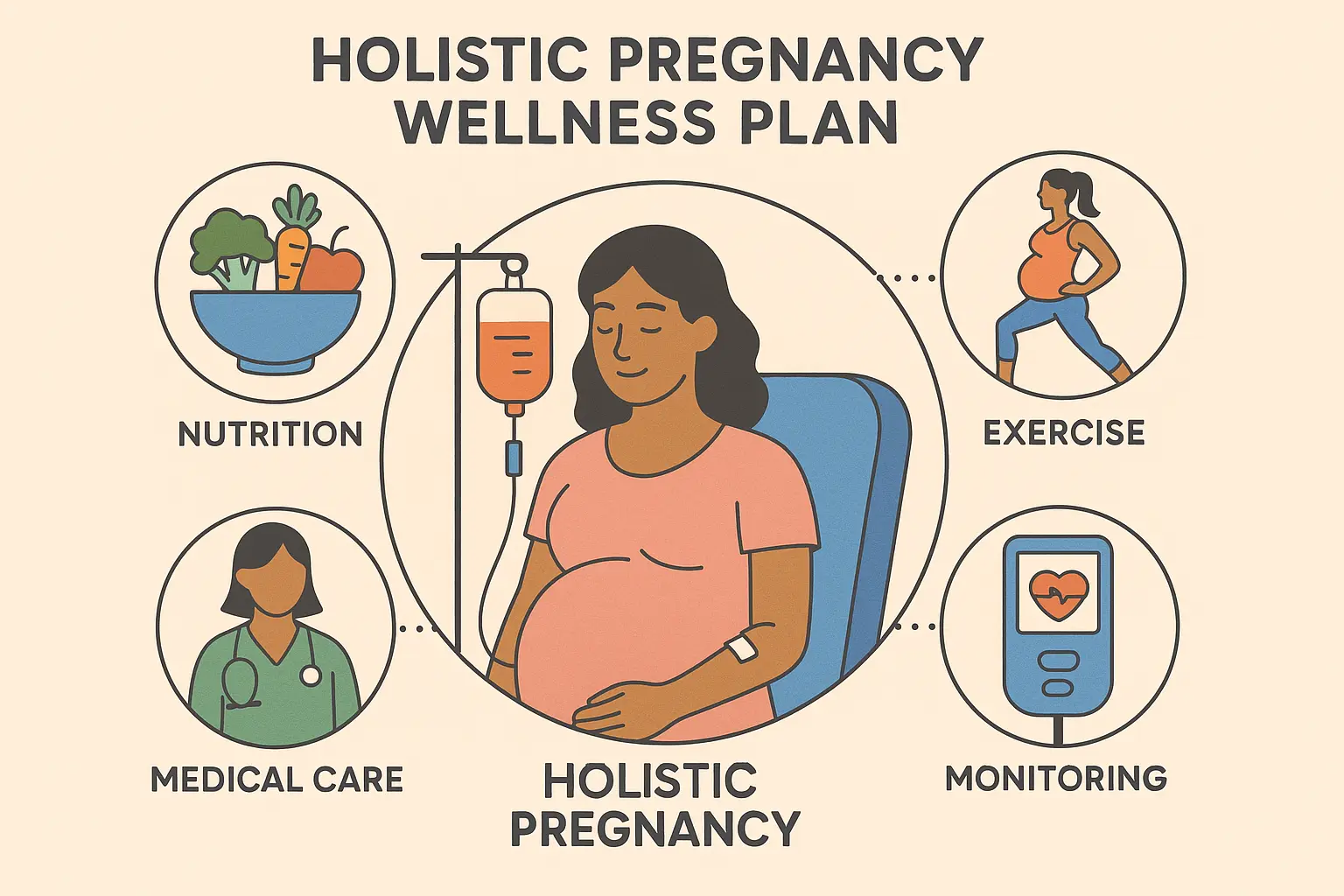
Look, I’m all for the whole “wellness journey” approach, but when you’re puking your guts out, you just want to feel human again. IV therapy for pregnancy works best when it’s part of an overall survival strategy rather than a standalone treatment. I learned that combining IV therapy with realistic nutritional support, stress management, and continuous monitoring creates effects that go way beyond what any single treatment can achieve.
This integrated approach addresses why you’re having problems instead of just treating the symptoms.
Assessment That Goes Beyond Basic Prenatal Care
Comprehensive health assessments can reveal specific factors that make IV therapy more or less appropriate for your individual situation. Standard prenatal care often misses genetic variations, absorption issues, and metabolic patterns that significantly impact how your body processes nutrients and maintains hydration during pregnancy.
Understanding these individual factors helps create targeted IV protocols instead of generic treatments that may or may not work for you.
Genetic Testing That Reveals Why You Feel So Awful
Genetic testing can identify specific reasons why your body struggles with nutrient absorption during pregnancy that standard prenatal vitamins simply cannot address effectively. MTHFR mutations, for example, affect how your body processes folate and B-vitamins – critical nutrients during pregnancy that may require IV delivery to reach therapeutic levels.
These genetic insights transform IV therapy from a general treatment into personalized medical intervention. Understanding your genetic makeup becomes crucial for pregnancy health, particularly when considering how folate metabolism variations can impact both your health and your baby’s development.
Using Technology to Time Treatments Better
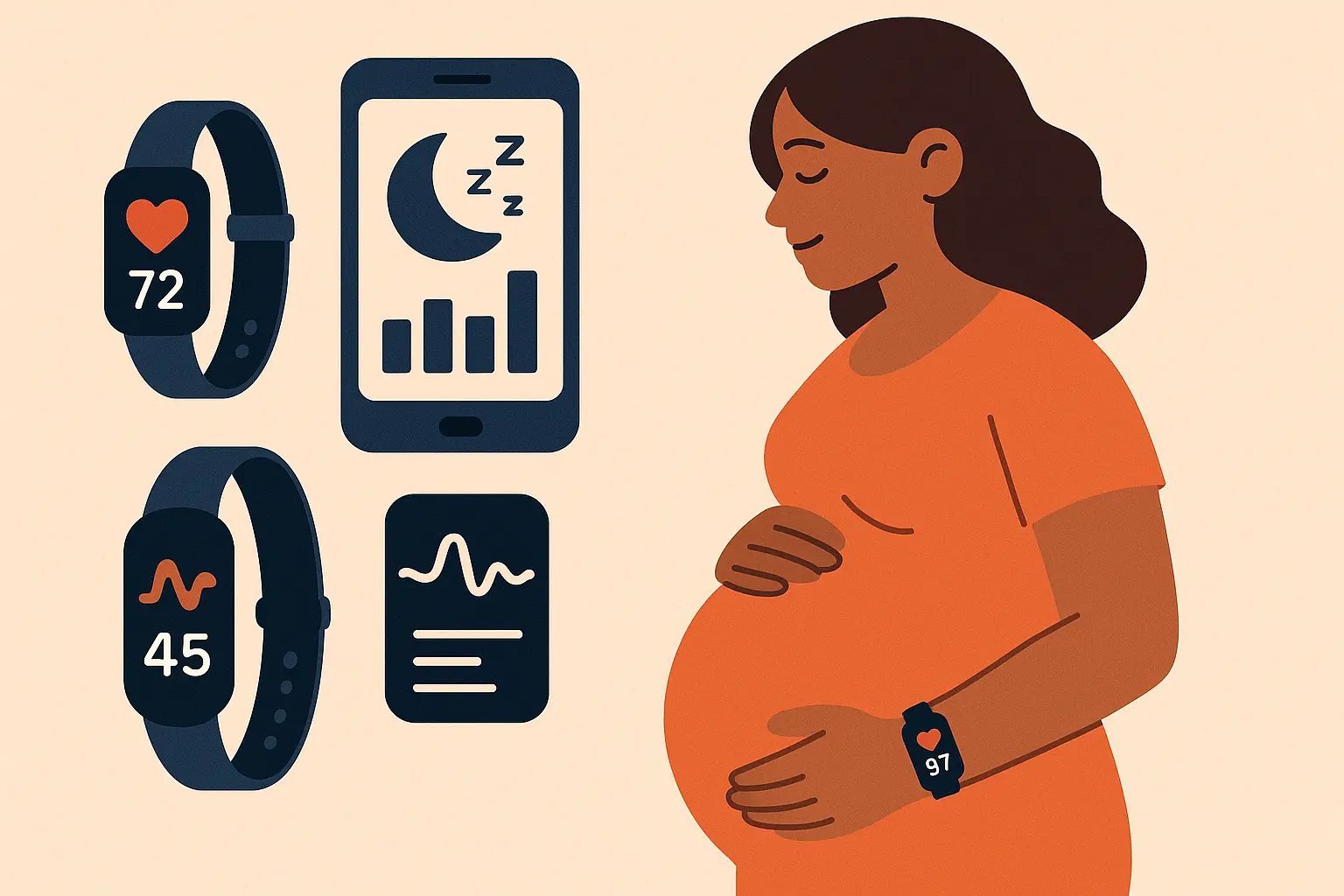
Continuous health monitoring from wearable devices can help determine when and how you receive IV therapy based on your real-time stress levels, sleep patterns, and activity levels. This data reveals patterns that aren’t obvious during brief medical appointments, allowing providers to time IV treatments when your body is most receptive.
How Enov.one Can Actually Help Your Situation
After going through all this, I realized the biggest missing piece was having someone who could look at my whole situation and help me figure out if IV therapy made sense for me specifically. Enov.one’s approach addresses exactly what pregnant women need – comprehensive assessment that goes beyond standard prenatal care, personalized treatment recommendations, and ongoing monitoring that adapts as your pregnancy progresses.
Enov.one’s platform combines genetic insights, wearable technology data, and detailed nutritional assessment to determine whether IV therapy is appropriate for your specific situation. Their telemedicine approach means you can get expert guidance without dragging yourself to another medical appointment when you can barely get off the couch, while their focus on addressing fatigue, mood issues, and overall well-being aligns perfectly with why most women seek IV therapy during pregnancy.
Ready to figure out if IV therapy could help your pregnancy? Start with Enov.one’s comprehensive health assessment to get the personalized insights you need to make informed decisions about this treatment option.
Final Thoughts From Someone Who’s Been There
Look, I’m not a doctor, and every pregnancy is different. But I’m a mom who’s been there, throwing up in grocery store parking lots and crying because I couldn’t keep prenatal vitamins down. Pregnancy IV therapy isn’t just about treating severe morning sickness anymore – it’s become a sophisticated medical intervention that can prevent complications, improve quality of life, and support both your health and your baby’s when used appropriately.
What I wish I had known earlier is that waiting until you’re in crisis mode makes everything harder – the treatment is more intensive, the risks are higher, and recovery takes longer. The preventive approaches and home-based options are changing the game for women who previously had to choose between suffering through symptoms or spending days in the hospital.
Most importantly, IV therapy during pregnancy requires providers who truly understand that they’re treating two people at once. Whether you’re dealing with hyperemesis gravidarum, chronic dehydration, or want to optimize your pregnancy wellness, the right assessment and personalized approach can make all the difference.
If my story helps even one woman feel less alone or get help sooner, then sharing all these embarrassing details was worth it. Don’t let anyone – not your mom, not your mother-in-law, not even some doctors – tell you that feeling like death is just “part of pregnancy.” You deserve to feel human while growing a human.