
Ugh. It’s Monday morning and you still feel like garbage from Saturday night’s “just a few drinks.” Your head is pounding, you can barely think straight, and everyone at work is asking if you’re okay. Meanwhile, your coworker who was doing shots until 2 AM is practically bouncing off the walls. What gives?
Welcome to the world of two-day hangovers – a totally real thing that happens to way more people than you’d think. According to Dr Chun Tang, GP at Pall Mall Medical, “Hangovers are a self-induced vicious cycle, and poor management of alcohol intake can lead to the feeling that a hangover is lasting for 48 hours.”
If you’ve ever wondered why some people bounce back in 12 hours while you’re still suffering days later, I’m about to explain exactly what’s happening inside your body. Spoiler alert: it’s not because you’re weak.
Table of Contents
- The Real Reason Your Hangover Lasts 48+ Hours
- Your Body’s Recovery Timeline (It’s More Complex Than You Think)
- Why Some People Get Hit Harder Than Others
- Science-Backed Ways to Speed Up Recovery
- Final Thoughts
TL;DR
- Two-day hangovers aren’t bad luck – your body is literally dealing with poison buildup that damages your cells for days
- Your brain stays angry and inflamed for 24-48 hours after drinking, which explains why you feel like your head is in a fog
- Some people have genetic variations that make them process alcohol toxins way slower (like running on dial-up internet while everyone else has fiber optic)
- Getting older, being low on certain vitamins, and having health issues you don’t even know about make hangovers drag on forever
- Certain supplements like NAD+, glutathione, and B-vitamins can actually help speed up recovery
- Your body’s internal clock gets completely scrambled, and you need specific tricks to reset it
The Real Reason Your Hangover Lasts 48+ Hours
Most people think hangovers are just about being dehydrated. I used to think that too, until I realized why chugging Gatorade sometimes does absolutely nothing. Two day hangover symptoms reveal something much nastier about what alcohol does to your body. We’re talking about your liver getting completely overwhelmed, toxic waste building up in your system, and your brain having what’s basically a two-day temper tantrum.
Understanding this process explains why some hangovers feel endless and why the usual “remedies” often fail miserably.
It’s Not the Alcohol – It’s What Comes After
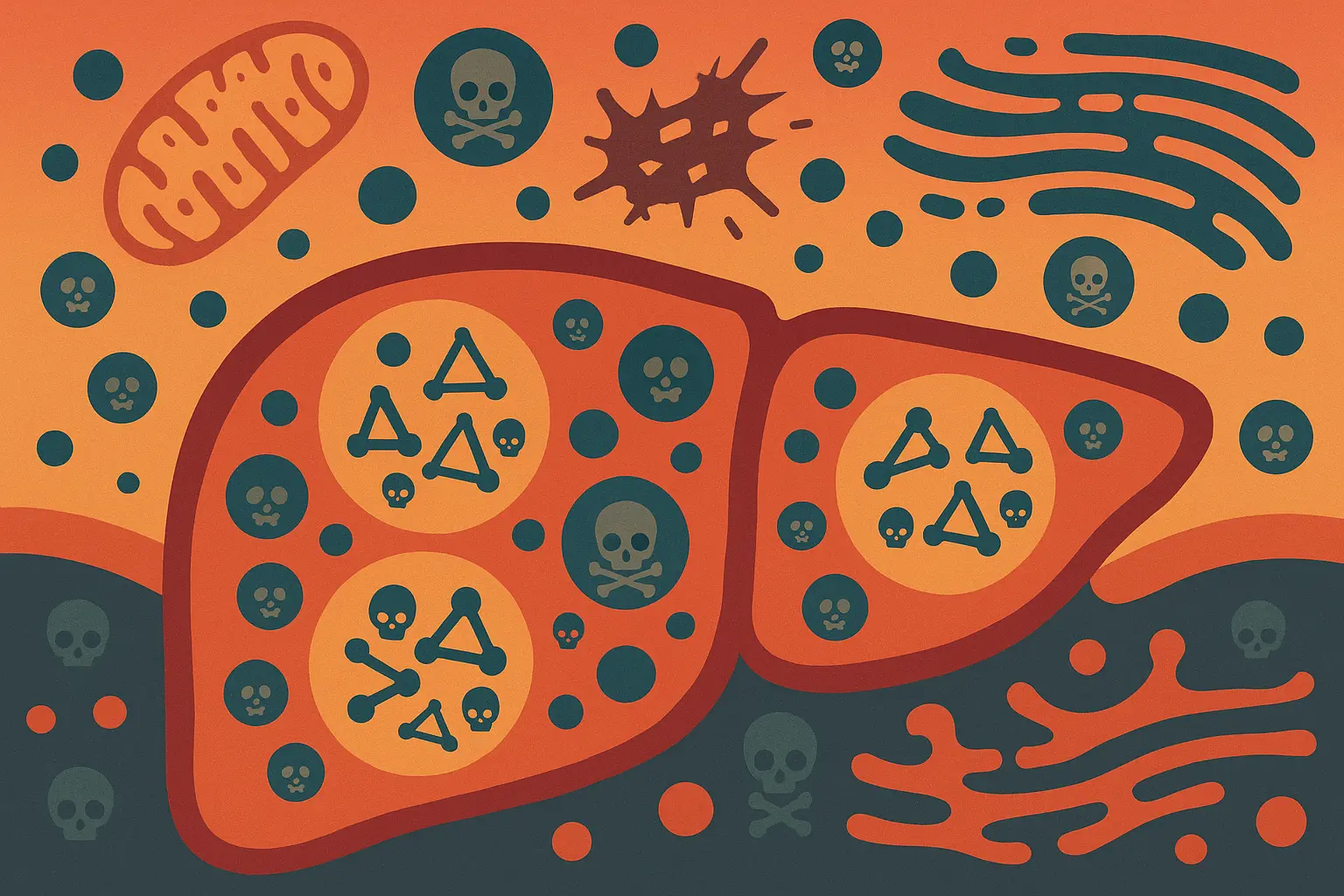
Here’s the thing: the villain in your two-day hangover story isn’t actually the alcohol itself. It’s something called acetaldehyde – basically poison that your liver makes when it’s trying to break down alcohol. Think of it like this: your liver is a busy restaurant kitchen, and someone just dumped twice as many orders on the counter. When your cleanup crew gets overwhelmed (which happens easier than you’d think), this toxic waste piles up in your system and wreaks havoc on your cells for days.
Your liver’s toxic waste didn’t get properly disposed of, and now you’re paying the price.
Understanding the toxic aftermath of alcohol metabolism is crucial, especially when considering recent medical breakthroughs in hangover treatment that target these specific pathways.
The confusion between extended hangover symptoms and other conditions can be dangerous. In 2024, adventurer Aldo Kane experienced this firsthand when he “woke up on the Saturday feeling a bit rough, Sunday I was thinking two-day hangover isn’t right” according to Daily Mail. What he initially dismissed as a prolonged hangover after a wedding turned out to be malaria, requiring immediate hospitalization. This highlights the importance of recognizing when symptoms persist beyond typical hangover duration.
Your Genes Determine How Long You Suffer
Some people hit the genetic lottery when it comes to processing alcohol toxins, while others got dealt a rough hand. It’s like some people have a Formula 1 pit crew for a liver, while others are working with a couple of tired mechanics.
If you inherited the slower-processing versions of certain genes (called ALDH2 and ADH), you’re basically stuck with toxic buildup for longer periods. This explains why your college roommate bounced back in 12 hours while you’re still dying two days later. It’s not about willpower – it’s about biology.
Genetic variations play a crucial role in how your body processes toxins, and the importance of genetics in personalized healthcare extends far beyond just alcohol metabolism.
As noted by Pall Mall Medical, some people are “genetically more likely to suffer from feeling sick – this could be down to a lack of the enzyme Aldehyde Dehydrogenase, which helps to break down the toxic metabolite found in alcohol.”
Your Body’s Energy Factories Are Getting Wrecked
That poison I mentioned? It doesn’t just make you feel crappy – it literally damages your cells’ energy factories (called mitochondria). Imagine if someone went into a power plant and started smashing equipment. That’s basically what’s happening to your cells.
This cellular sabotage is why you feel that bone-deep exhaustion that sleep doesn’t seem to fix. Your cells are running on backup power while trying to repair the damage, which can take days.
Take Sarah, a 32-year-old marketing executive who had just three glasses of wine at a work event. Despite drinking water and eating beforehand, she felt like she’d been hit by a truck for two full days. Turns out, she has a genetic variation that makes her process toxins super slowly, so the poison was hanging around in her system, damaging her cells and requiring 48 hours for everything to get back to normal.
The Energy Crisis Nobody Talks About
Here’s something most people don’t know: alcohol burns through something called NAD+ (think of it as your cell’s battery power) way faster than your body can make more. Without enough NAD+, your cellular repair processes crawl to a halt.
Getting your battery levels back to normal takes 24-48 hours in healthy people, but can take even longer if you’re dealing with other health issues or running low on certain nutrients.
NAD+ depletion during alcohol metabolism is why many people turn to NAD injections and IV therapy to accelerate recovery from severe hangovers.
Your Brain Stays Angry Long After You Stop Drinking
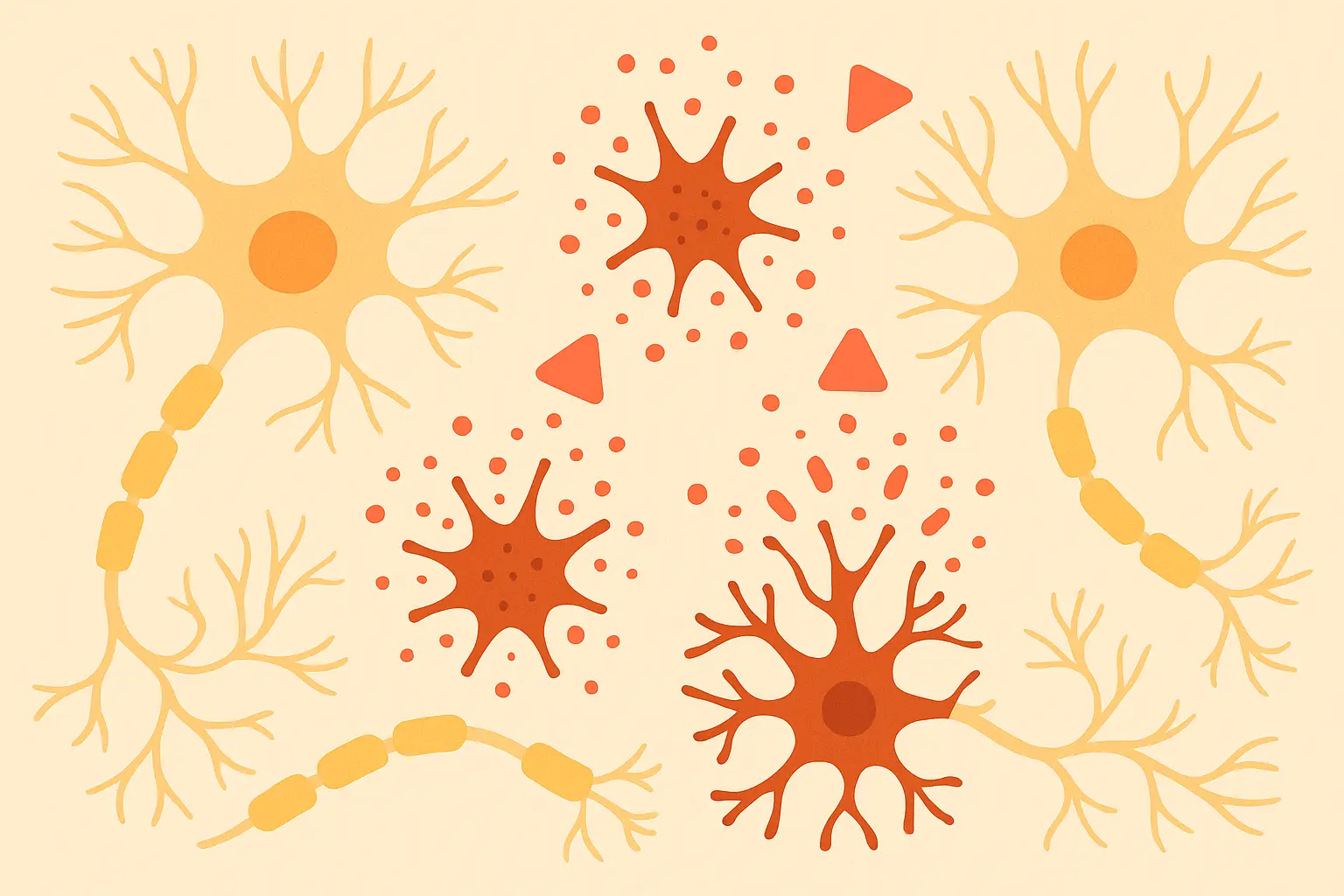
Extended hangovers happen because your brain’s security system goes haywire and stays that way. Your brain has these cells called microglia that are supposed to protect you, but they keep pumping out angry chemicals for up to 48 hours after the alcohol has left your system.
This is why you get those persistent headaches, mental fog, and mood swings that make you feel like you’re thinking through molasses. Two-day hangover symptoms stick around because your brain is basically having a prolonged tantrum.
The 48-Hour Brain Tantrum Timeline
Your brain’s security cells don’t get the memo that the party’s over. They stay activated for 24-48 hours post-drinking, continuously releasing inflammatory stuff that keeps your head pounding and your thoughts scattered.
This isn’t just feeling “off” – scientists can actually see this inflammation on brain scans.
| Time After Drinking | How Angry Your Brain Is | What You Feel |
|---|---|---|
| 0-6 hours | Absolutely furious | Severe headache, can’t think straight |
| 6-12 hours | Still pretty mad | Persistent headache, brain fog |
| 12-24 hours | Moderately annoyed | Mental exhaustion, hard to focus |
| 24-48 hours | Slowly chilling out | Lingering cognitive weirdness |
| 48+ hours | Back to normal | Finally feeling human again |
When Your Brain’s Security System Fails
Alcohol temporarily makes your blood-brain barrier more leaky – basically opening the gates for inflammatory troublemakers to flood into your brain. These inflammatory compounds can hang around for way longer than you’d expect, which is why your head feels fuzzy long after you think you should be fine.
Your brain’s usually tight security becomes a broken fence.
Your Body’s Cleanup Crew Goes on Strike
Your body has this amazing master antioxidant called glutathione that’s supposed to protect your cells from damage. But alcohol metabolism burns through it faster than you can say “never drinking again.” Without enough of this cellular bodyguard, your cells become sitting ducks for ongoing damage that can last for days.
It’s like having your security system offline while someone’s actively trying to break into your house.
Your Liver’s Recovery Marathon
Your liver needs 24-72 hours to rebuild its glutathione supplies back to normal levels. During this time, your cellular protection against damage stays compromised, leaving you vulnerable to ongoing problems and slower recovery.
Having your body’s security system offline while trying to clean up from a break-in is essentially what’s happening here.
According to research highlighted by LADbible, “It has been suggested that a worsening hangover can also be linked to declining supplies of alcohol dehydrogenase, the enzyme which metabolises alcohol and breaks down its toxins, which is thought to lower with age.”
Your Body’s Recovery Timeline (It’s More Complex Than You Think)
Recovery from a two-day hangover isn’t about just waiting it out and hoping for the best. Your body goes through specific phases of repair that you can either help or accidentally sabotage depending on what you do. Understanding how this actually works explains why some recovery tricks work better than others and why patience alone sometimes isn’t enough to feel human again.
How long does a hangover last? The answer depends on multiple systems in your body all trying to get back to normal at the same time.
Real Hydration Goes Way Deeper Than Chugging Water
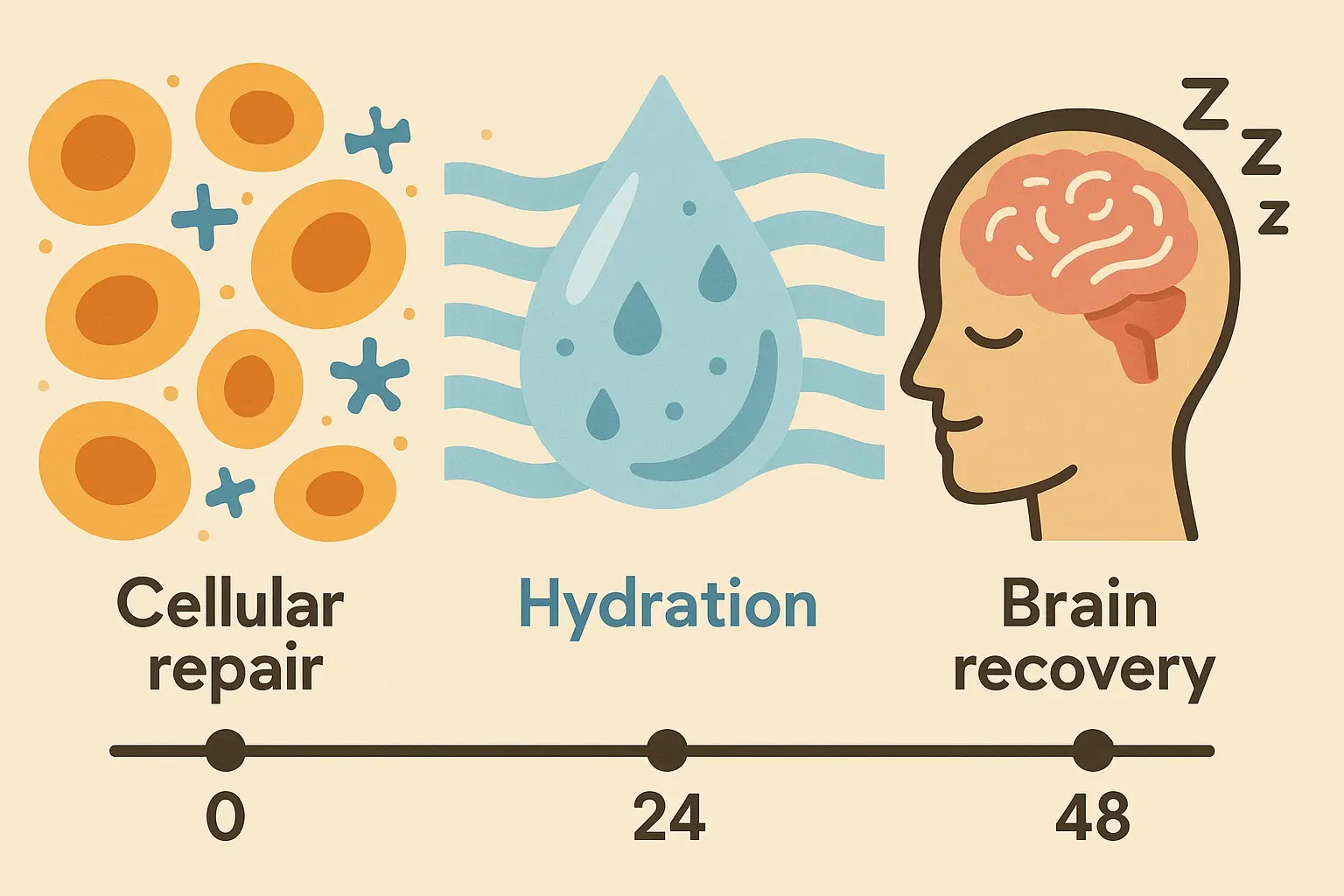
Everyone knows to drink water for a hangover, but here’s the thing: you can drink gallons of water and still feel dehydrated. That’s because alcohol messes with the tiny pumps that move water in and out of your cells, creating dehydration that can’t be fixed with plain water alone.
It’s like trying to fill a bucket with holes in it instead of actually fixing the holes.
Your Cells Are Basically Broken Sponges
Alcohol disrupts these things called sodium-potassium pumps, which are responsible for keeping the right amount of fluid inside your cells. This creates cellular dehydration that persists even when your blood volume looks totally normal.
The difference between flooding a broken system and actually fixing it is huge here.
Mark, a 28-year-old teacher, drank two liters of water during his Sunday hangover but still felt dehydrated and dizzy. His cellular pumps were basically broken from the previous night’s drinking. Only when he had an electrolyte solution with the right balance of sodium, potassium, and magnesium did his cells finally start working normally again.
Why Your Cells Stay Shrunken
During alcohol metabolism, your cells get squeezed and stretched in ways they’re not designed for. Getting your cellular architecture back to normal takes 36-48 hours, which explains why symptoms stick around despite drinking plenty of fluids.
Your cells literally need time to rebuild and stabilize.
Your Brain Chemistry Needs a Complete Reboot
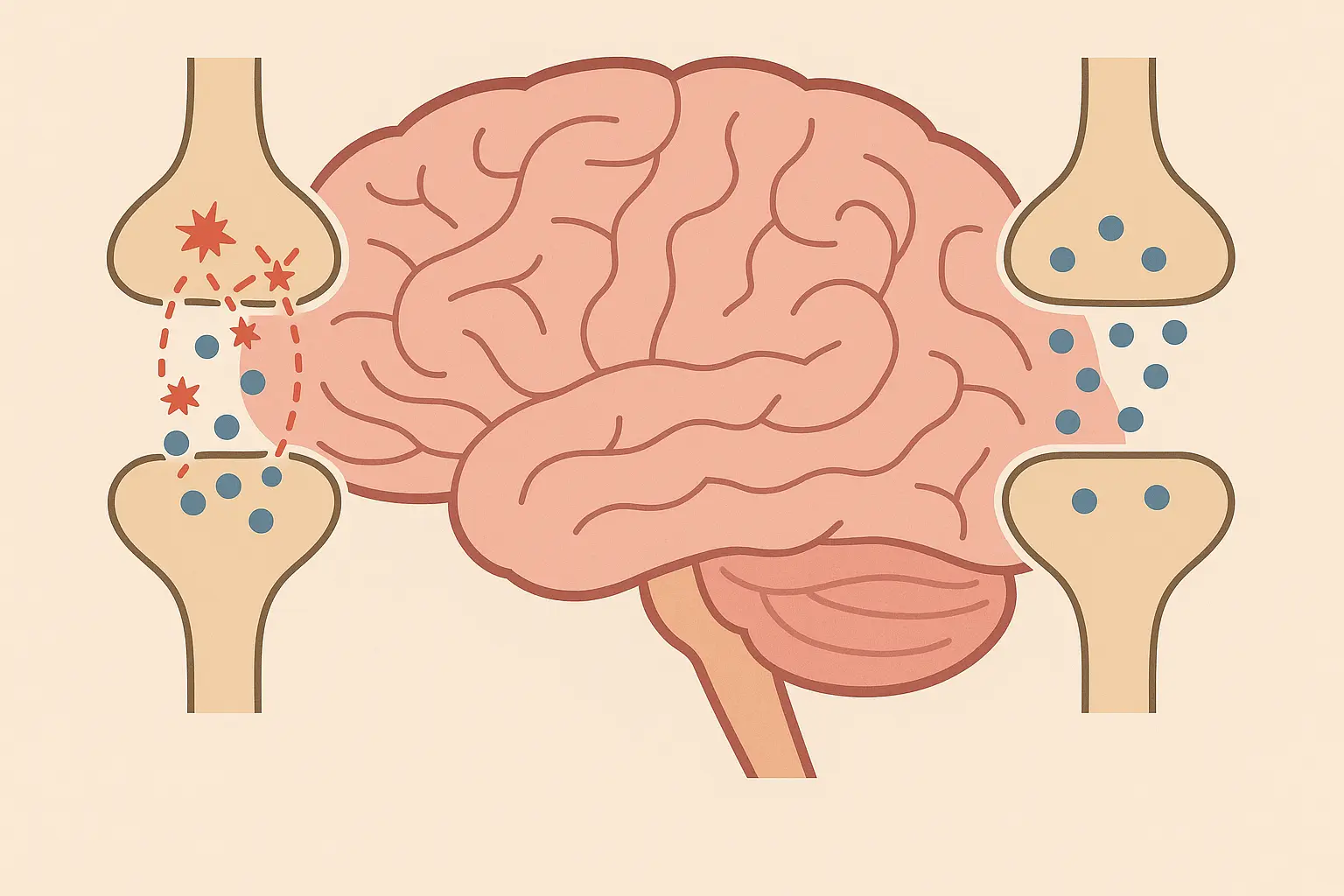
Extended hangovers mess with your brain’s entire chemical messaging system. Alcohol interferes with GABA (your brain’s “chill out” chemical), dopamine (your motivation chemical), and serotonin (your happiness chemical).
Getting these systems back online takes time and often explains why you feel emotionally fragile and weird for days after drinking.
| Brain Chemical | What It Normally Does | What Alcohol Does To It | How Long To Fix |
|---|---|---|---|
| GABA | Keeps you calm | Enhances it then crashes it | 24-48 hours |
| Dopamine | Motivation and reward | Artificial spike then crash | 1-2 days |
| Serotonin | Mood and sleep | Messes up production | 24-72 hours |
| Norepinephrine | Alertness and focus | Goes completely haywire | 12-36 hours |
The Anxiety Rebound Effect
Alcohol enhances your brain’s “chill out” system (GABA), but your brain compensates by turning down the volume on those receptors. When alcohol leaves, you’re left with a dampened calm-down system for 24-48 hours, which explains the anxiety, restlessness, and sleep problems that make extended hangovers so miserable.
Your brain’s brake system is temporarily offline.
The disruption of GABA function during hangovers shares similarities with other conditions, which is why understanding gamma-aminobutyric acid (GABA) supplementation can be helpful for recovery.
The Motivation Crash and Recovery
Alcohol triggers artificial dopamine release, followed by a crash that leaves you feeling flat and unmotivated. Your natural dopamine production and sensitivity need 1-2 days to get back to normal, which is why everything feels less enjoyable during a hangover.
Your brain’s reward system is basically recalibrating itself.
When Your Happiness Chemical Goes AWOL
Alcohol messes with the pathway that makes serotonin, disrupting mood regulation for days. Getting this pathway back to normal takes 24-72 hours depending on your nutritional status, particularly your levels of B-vitamins and amino acids.
This explains the emotional rollercoaster that often comes with extended hangovers.
Why Some People Get Hit Harder Than Others
If you’ve ever felt like a complete weakling because your coworker seems fine after the same night out, join the club. The truth is, about 25% of us have genetic variations that make us process alcohol like we’re running on dial-up internet while everyone else has fiber optic. These aren’t excuses – they’re real biological differences that can often be identified and addressed.
Being hungover for days while others bounce back quickly isn’t a character flaw.
Age Isn’t Just a Number When It Comes to Hangovers
Remember when you could drink your friends under the table and show up to work fresh as a daisy? Yeah, those days are gone. Your liver at 35 is basically that friend who used to be the life of the party but now needs three business days to recover from staying up past 10 PM.
Getting older means your body becomes significantly less efficient at processing alcohol and recovering from its effects.
Your Liver Gets Lazy Every Decade
The enzymes responsible for breaking down alcohol decrease in activity by about 20% per decade after age 40. This directly affects how long hangovers last and how brutal they feel.
What used to be a 12-hour inconvenience becomes a 48-hour ordeal simply because your processing power has declined.
The reality of age-related hangover severity is well-documented in medical literature. As reported by LADbible, “The body’s ability to process alcohol can worsen with age,” with declining enzyme production making recovery increasingly difficult as we get older.
Running Low on Key Nutrients Makes Everything Worse
Certain nutrient deficiencies act like hangover amplifiers, dramatically making both duration and severity worse. B-vitamins, magnesium, and amino acids are particularly crucial because they’re essential for the detox and repair processes your body needs to recover.
Running low on these nutrients is like trying to fix a car without the right tools.
The B-Vitamin Disaster
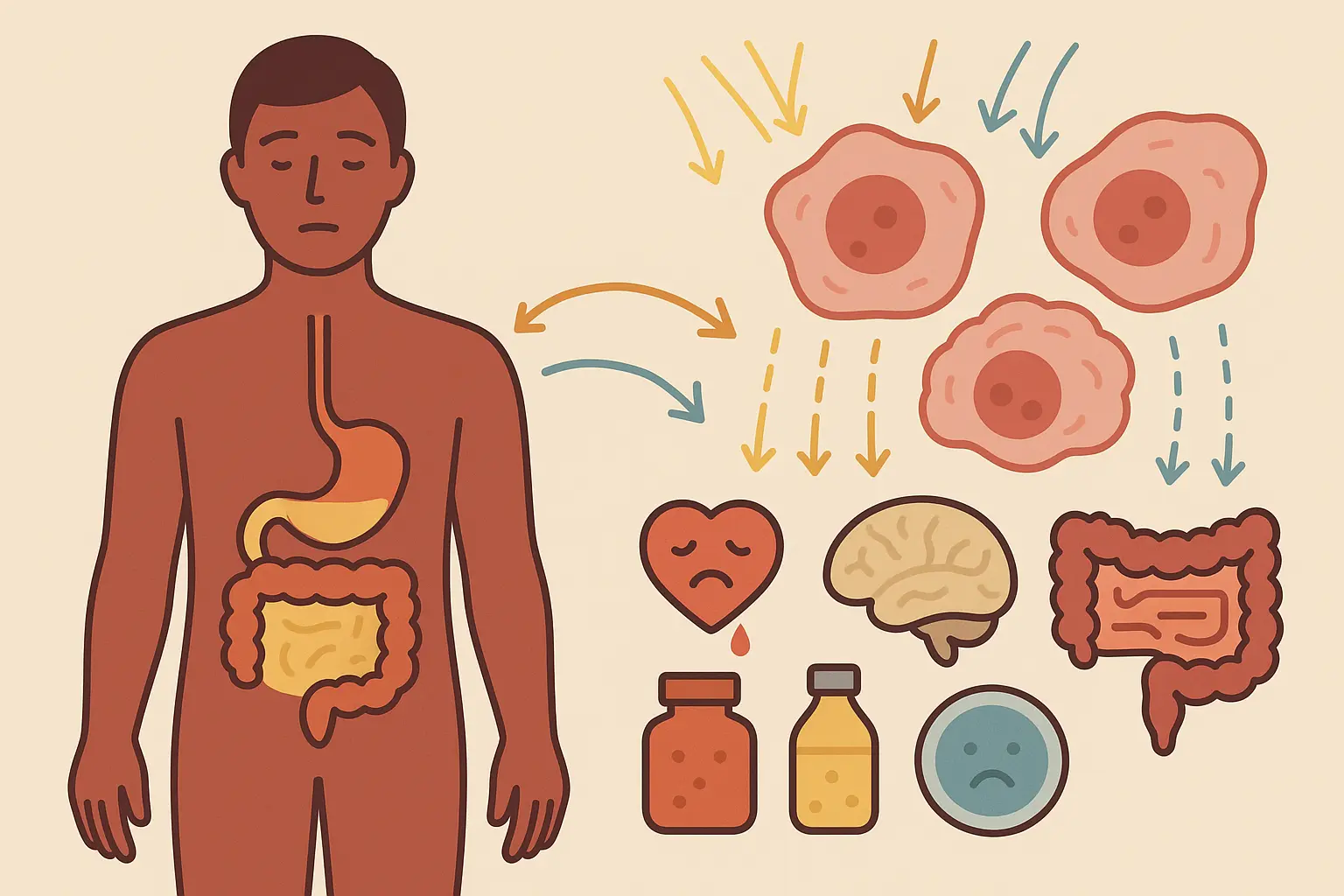
Alcohol metabolism rapidly burns through B1, B6, and B12 – vitamins that are absolutely essential for brain chemical production and cellular energy. If you’re already running low on these nutrients (which many people are without knowing it), alcohol consumption creates a severe shortage that makes recovery take forever.
Your body literally can’t perform the repairs it needs without these building blocks.
B-vitamin deficiencies are particularly problematic for those with genetic methylation issues, which is why targeted approaches like hypomethylation stack B12 subtype supplementation can be crucial for faster recovery.
Jessica, a 29-year-old vegetarian, experienced three-day hangovers despite moderate drinking. Blood tests revealed she was severely low on B12 and folate from her plant-based diet. After three months of targeted B-complex supplements, her hangover duration dropped from 72 hours to less than 24 hours. Her body finally had the tools it needed to do its job.
Magnesium: The Forgotten Recovery Mineral
Over 300 different repair processes involved in hangover recovery require magnesium, yet most people are deficient in this crucial mineral. Without adequate magnesium, detox and cellular repair hit bottlenecks that slow recovery to a crawl.
It’s like trying to run a factory with half the assembly line workers missing.
Hidden Health Issues Make Everything Worse
Underlying health conditions that you might not even know you have can transform a typical hangover into a multi-day recovery nightmare. Conditions affecting liver function, inflammation levels, or how efficiently your body works create the perfect storm for extended hangovers that seem way out of proportion to how much you actually drank.
Two-day hangover experiences often reveal these hidden health issues.
The Fatty Liver Factor
Non-alcoholic fatty liver disease affects about 25% of adults and significantly impairs alcohol processing. If your liver is already struggling with fat buildup, adding alcohol to the mix completely overwhelms its capacity and makes hangovers drag on forever.
Many people have this condition without knowing it, wondering why their hangovers seem worse than everyone else’s.
According to Nutritionist Resource, “on average, it takes an hour to process one unit, but this can vary widely from person to person,” highlighting the significant individual variation in alcohol metabolism that contributes to hangover duration differences.
Science-Backed Ways to Speed Up Recovery
Rather than suffering through a two day hangover hoping time will heal all wounds, there are targeted things you can do to significantly reduce both how long it lasts and how miserable you feel. These aren’t random folk remedies or wishful thinking – they’re evidence-based strategies that actually support your body’s natural recovery processes.
Strategic Supplements That Actually Work
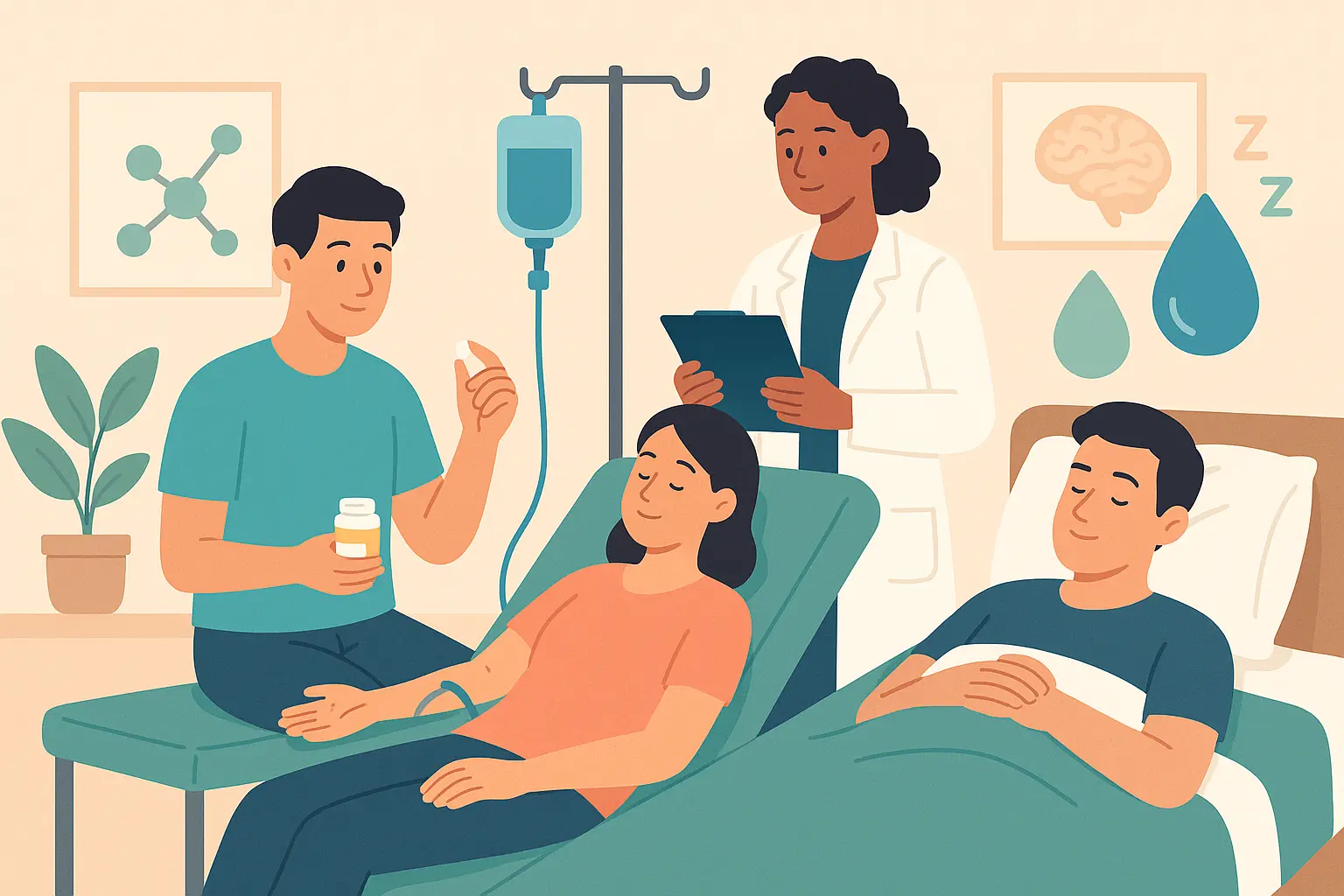
Look, I’m not saying you need to become a supplement guru, but a few key things can really help. This isn’t about taking random vitamins and hoping for the best – it’s about strategically giving your body the specific nutrients it needs to repair damage and get back to normal faster.
NAD+ Boosters: Jump-Starting Your Cellular Repair
Nicotinamide riboside (NR) or NMN supplementation can rapidly restore those cellular battery levels that alcohol depletes. This speeds up energy production and DNA repair processes that are critical for hangover recovery.
It’s like giving your phone a portable charger when the battery’s dying, except for your entire body.
Glutathione Support: Rebuilding Your Cleanup Crew
N-acetylcysteine (NAC) gives your body the building blocks it needs to make glutathione, while liposomal glutathione offers direct antioxidant support during the critical recovery window. This helps protect your cells from ongoing damage while your natural defense systems rebuild.
B-Complex: Your Liver’s Best Friends
High-dose B-complex supplementation, particularly methylated forms of B12 and folate, can rapidly restore the cofactors needed for brain chemical production and cellular metabolism. This is especially important if you’re already deficient, which many people are without realizing it.
Hangover Recovery Supplement Checklist:
- NAD+ precursor (NR or NMN) – 250-500mg
- N-acetylcysteine (NAC) – 600mg twice daily
- Methylated B-complex – high potency formula
- Magnesium glycinate – 400mg
- Electrolyte solution with proper ratios
- Vitamin C – 1000mg for additional antioxidant support
Resetting Your Internal Clock
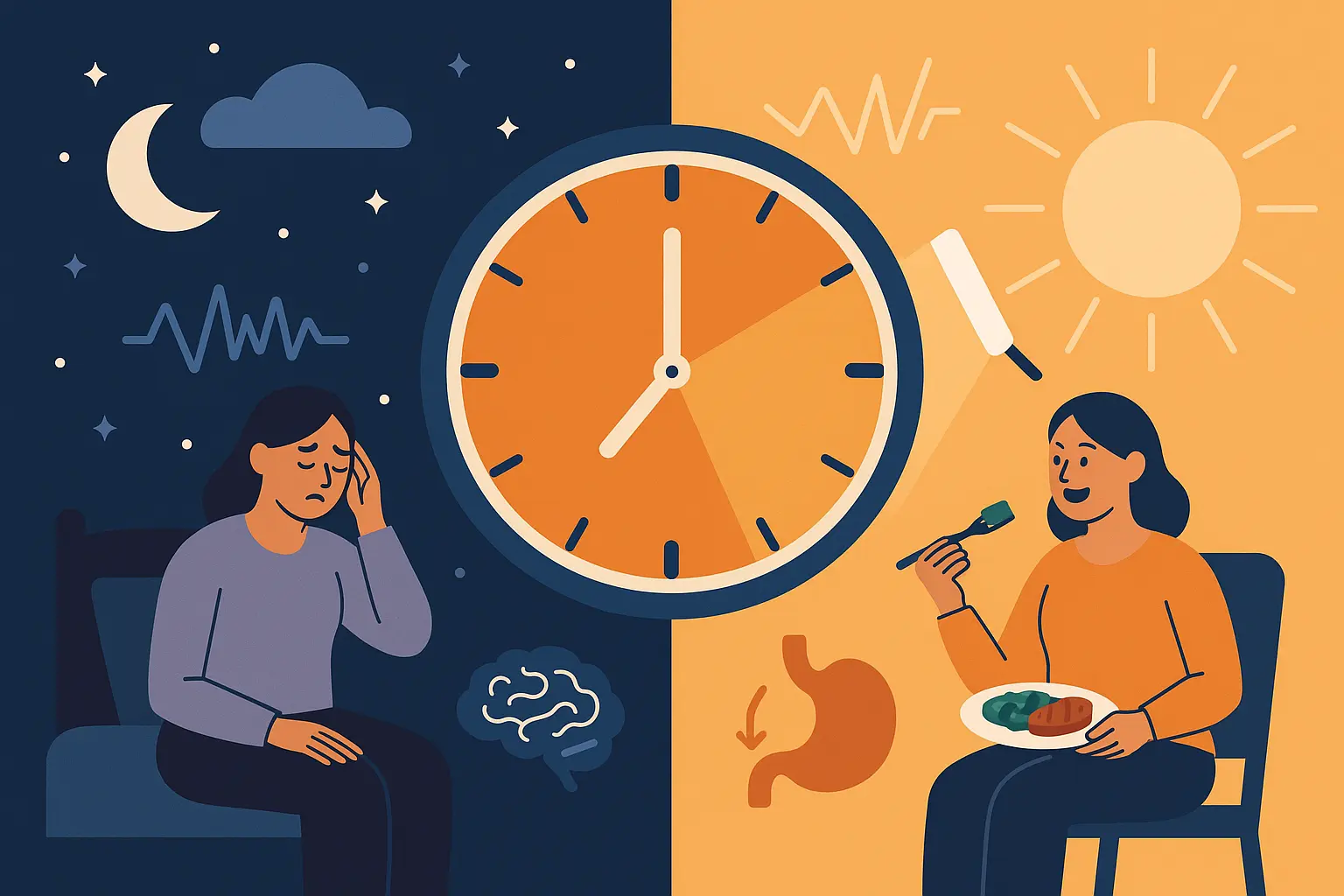
Alcohol completely scrambles your body’s internal clock, and recovery requires specific strategies to get it back on track. Your brain gets stuck thinking it’s in a different time zone, which is why you feel jet-lagged without going anywhere.
Two-day hangover recovery often stalls because people ignore this circadian disruption.
Light Therapy for Faster Recovery
Strategic bright light exposure (10,000 lux) for 30 minutes when you wake up can help reset disrupted circadian rhythms and improve mood and energy levels during hangover recovery. This isn’t just about feeling more alert – it’s about helping your body’s internal systems get back in sync.
Meal Timing as Medicine
Time-restricted eating with your first meal 2-3 hours after waking helps synchronize your body’s peripheral clocks and optimize recovery processes. Your digestive system has its own internal clock that needs to be reset along with your sleep-wake cycle.
Circadian Reset Protocol:
- 30 minutes bright light exposure upon waking
- First meal 2-3 hours after waking
- Avoid caffeine after 2 PM
- Blue light blocking glasses 2 hours before bed
- Consistent sleep/wake times for 3-5 days
- Room temperature 65-68°F for optimal sleep
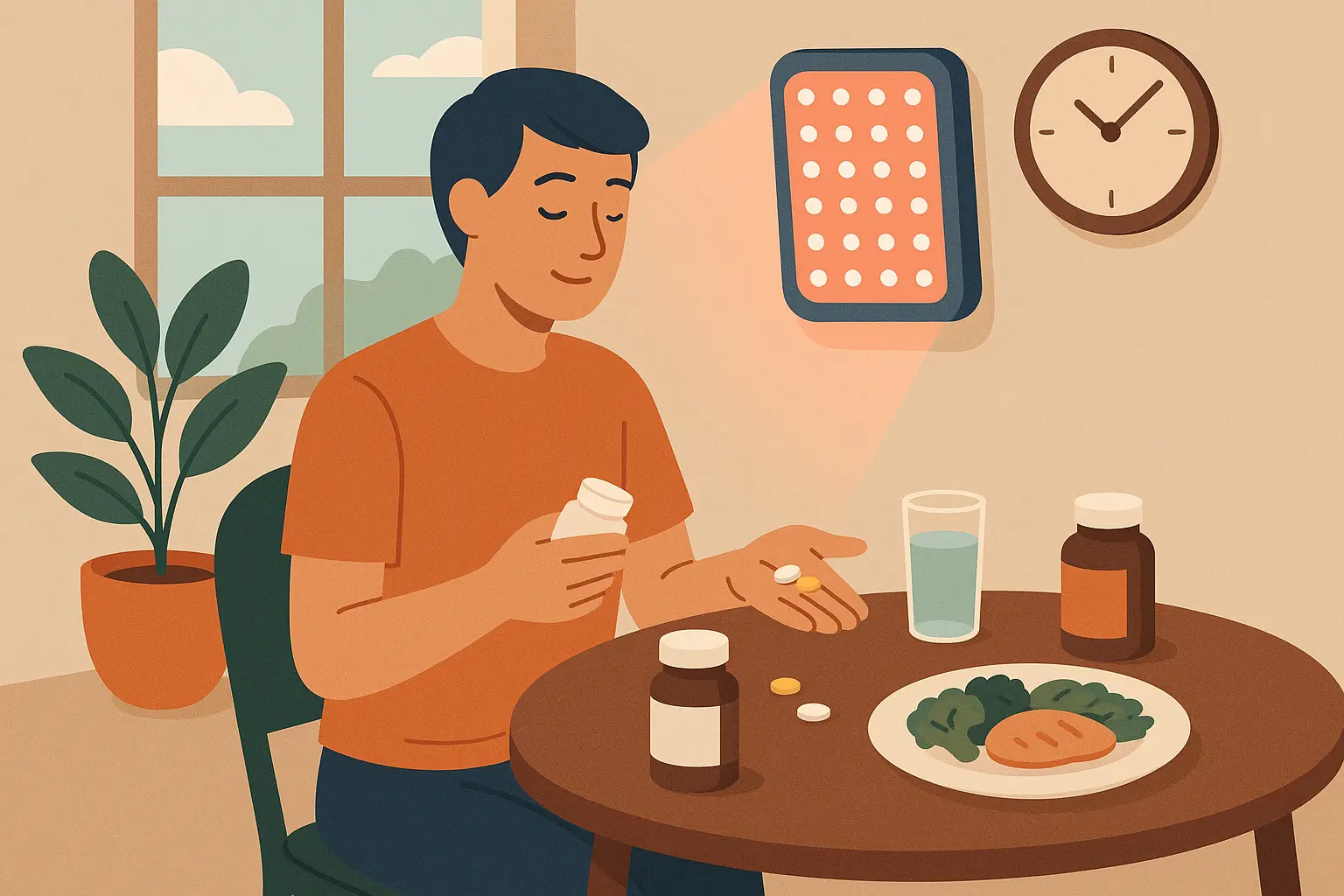
For those dealing with frequent two-day hangovers, Enov.one offers personalized recovery solutions that target these exact physiological pathways. Their telemedicine platform provides access to NAD+ therapy, B12 injections, and glutathione support – all delivered with the convenience of at-home treatment. Rather than suffering through another brutal hangover, you can take a proactive, science-based approach to recovery.
Final Thoughts
Two-day hangover experiences aren’t a sign that you’re weak or can’t “handle your alcohol” – they’re a complex biological response that varies dramatically between people. Understanding the science behind extended hangovers empowers you to make informed decisions about both prevention and recovery.
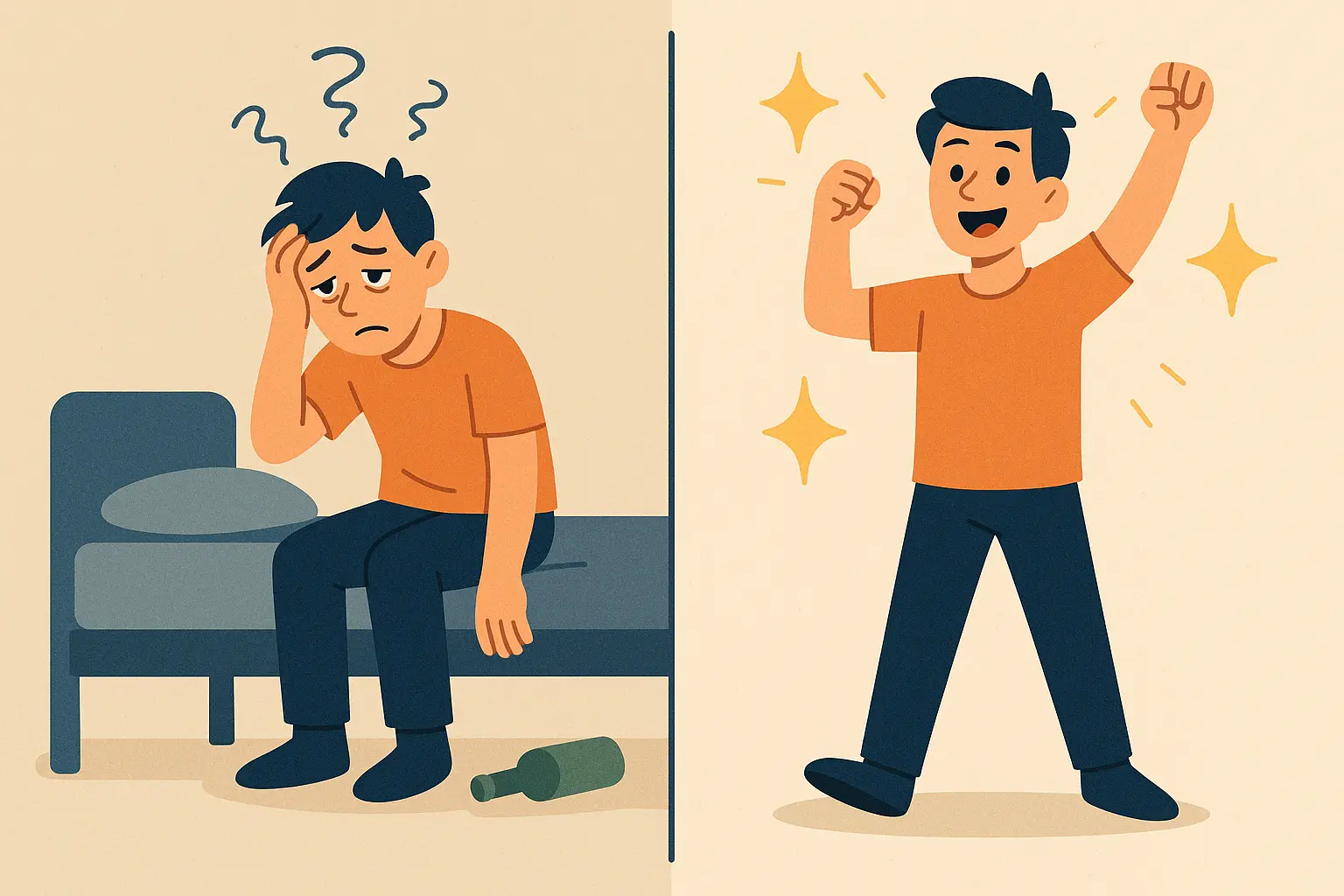
Here’s the truth nobody wants to hear: if you’re consistently getting two-day hangovers, your body might be trying to tell you something. Maybe it’s time to get some blood work done, or maybe you just need to accept that you’re not 22 anymore. Either way, you don’t have to suffer in silence.
The key insight here is that your body is doing exactly what it’s supposed to do when faced with alcohol’s toxic byproducts. The problem isn’t that your recovery system is broken – it’s that it’s overwhelmed and needs support. Whether that’s through strategic supplementation, better nutrition, or addressing underlying health issues, there are concrete steps you can take to reduce both how often and how severely you experience extended hangovers.
Most importantly, if you’re one of those people who gets knocked out for days after drinking, you’re not dramatic or weak. Your body is just working overtime to fix the damage, and sometimes it needs a little extra help. Be patient with yourself, and remember that understanding what’s happening is the first step toward feeling better faster.